2026 marks the 250th anniversary of the United States, also recognized as the Semiquincentennial. Much has happened in our short tenure as a union, and we turn to the historians, and often the artists, among us to make sense of our storied and complicated past.
Today’s voice from the field is Noelle Lorraine Williams, a Newark-based artist and historian, and Director of the African American History Program and the Black Heritage Trail. Williams is a graduate of the New School for Social Research and Rutgers University, Newark. As a public humanities specialist, artist, researcher, and curator, her work examines the ways in which African Americans utilize culture to re-imagine liberation in the United States. We will be diving into her work as the Director of the Black Heritage Trail.
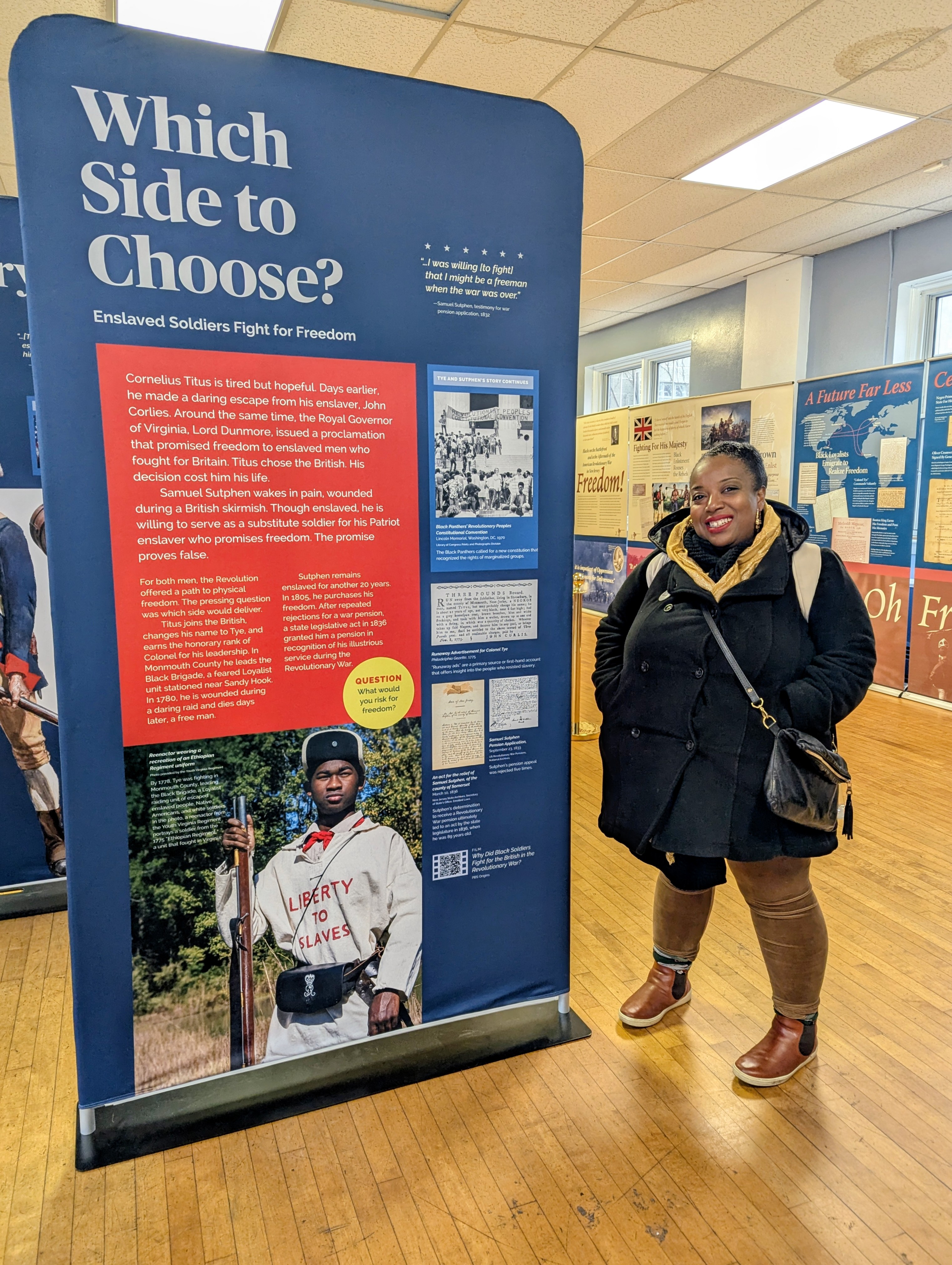
To truly understand the full history of this country —and the many lessons that can be gleaned from it — it is important to acknowledge that far too many stories and narratives have been erased and silenced in traditional renditions of our country’s founding. The Declaration of Independence was formally adopted on July 4, 1776, and just over a decade later, New Jersey became the third state to ratify the Constitution and join the Union in 1787. Much has happened over the last two hundred and fifty years, and the NEW JERSEY Black Heritage Trail aims to educate and celebrate the important contributions of African Americans in New Jersey’s history, and importantly, to challenge the existing historical narratives on progress and belonging.
Learn a bit more by stepping into our conversation below.
How do you plan to incorporate the Black Heritage Trail into state celebrations of that nation’s 250th anniversary?
NLW: Great question! The New Jersey Black Heritage Trail program falls under the direction of the New Jersey Historical Commission’s African American History Program, which is a state agency. The state’s RevolutionNJ initiative commemorates the 250th and is interwoven throughout all of the Commission’s work. Since the Trail was created, we have been intentional about how it can reflect New Jersey histories connected to the upcoming 250th commemoration.
First, the Black Heritage Trail was designed to be a “Living Trail.” Each marker has a QR code that connects you to the Commission’s site. State parks connected to the semiquincentennial were included in our initial staff recommendation for the Black Heritage Trail Advisory Committee. We are hosting a panel in Burlington on June 6, 2026, with the descendants of Black Revolutionary War soldiers and key individuals. We will be unveiling markers at Lawnside, the first independent self-governing African American community in New Jersey, and at Princeton Battlefield on July 11, 2026. Additionally, throughout the year, we highlight events related to the 250th that community groups, colleges and universities, and scholars are hosting in New Jersey on our “Black History Events in New Jersey” event list https://linktr.ee/blackhistorynj.
In what ways are you partnering with RevolutionNJ to celebrate the 250th?
NLW: The African American History Program – as part of the New Jersey Historical Commission – has served as a resource and advisor on many of the RevolutionNJ initiatives. We are excited to include the sites in a holistic celebration of Black historical sites in the state. That will include unveilings, programs, essays, and an educational and volunteer program called Freedom Seeker. Freedom Seeker will engage audiences using video, short essays, and opportunities for volunteer work to reflect on the past and future of African American history here in New Jersey and throughout the nation. This will debut in June 2026 on the New Jersey Historical Commission’s site www.history.nj.gov and on our social media.
What is the significance of entering our 250th year with the growth of this Trail?
NLW: 2026 marks the 250th and 100th year of commemorating Black history in the country. This year provides an important opportunity to reflect on the work that New Jersey historians, cultural workers, community members, and scholars have done to share the story of New Jersey’s Black Liberation Heritage, including involvement in the Revolutionary War, community activism, historical scholarship, culture, and civil rights of African Americans in the state and nationwide. For example, the Black Heritage Trail highlights major desegregation cases, along with cultural and economic initiatives like the Negro Baseball League and the formation of African American communities and towns in New Jersey with Black leadership. It provides audiences with opportunities to see the different ways African Americans have defined liberation over the past 250 years.
The Heritage Trail highlights history, both positive and negative. How are the less-than-positive stories treated with care on the trail?
NLW: When writing the text for the New Jersey Black Heritage Trail markers, we work with the nominations that historians and community members submit. We are sure to highlight the true history of the site. Then, we engage in a conversation and feedback process to determine the final text. For example, the Heritage Trail highlights the individuals, community members, and movements as subjects and creators. We highlight the liberatory aspect of the work, such as framing a church as important because of its structure and because communities fought to create it and participated in activism and educational work there.
At the behest of the federal government, certain markers of Black history are being removed across the nation. How, if at all, has this affected the approach to the Black Heritage Trail in New Jersey?
NLW: This has not affected our approach. This project was born out of a need for the state and community members to continue the work that we have been doing in New Jersey for decades. The New Jersey Historical Commission has been a consistent funder for African American programs, research, and events. The African American History program also co-founded the state’s longest-running conference on African American history and published books and curriculum that scholars still use today. This program expands the existing work of supporting our community members and makes scholars, reenactors, museums, artists, and others’ work even more impactful.
How is the Trail being promoted to residents and tourists?
NLW: The New Jersey Black Heritage Trail is grateful to have support in both local and national press. Opportunities such as these help people learn about the trail and gain greater information about the sites, movements, and events. We have a Black History Events in New Jersey list https://linktr.ee/blackhistorynj, which is included in our newsletters and website. The Heritage Trail has also engaged special promotions in USA Today and with NJTransit. As a result, Visit NJ will work to expand and align their Black Heritage Trail itineraries with our promotions.
What would you most like for the public to know about this Trail?
NLW: Most people do not know that African Americans were present in New Jersey before it even became a state. They also do not know that people of African descent were enslaved here or the hard work of Black communities on the Underground Railroad, building schools, communities, towns, and democracy in New Jersey, the country, and internationally.
We are excited in sharing this rich history so that audiences understand how our democratic system was built and fought for by not just one group but by many. Children, women, and men of African descent have shaped our history for more than 300 years.
We encourage everyone to visit our website at www.history.nj.gov, join our mailing list at https://bit.ly/NJHCMailingList, and follow us on social media: Facebook https://www.facebook.com/NewJerseyHistoricalCommission and Instagram https://www.instagram.com/newjerseyhistory.

This is but a small taste of what the New Jersey Historical Commission offers. Remember, as Maya Angelou once said, “You can’t really know where you are going until you know where you have been.” However you choose to educate yourself, know that the historians and artists are here as resources and guides on your journey.